


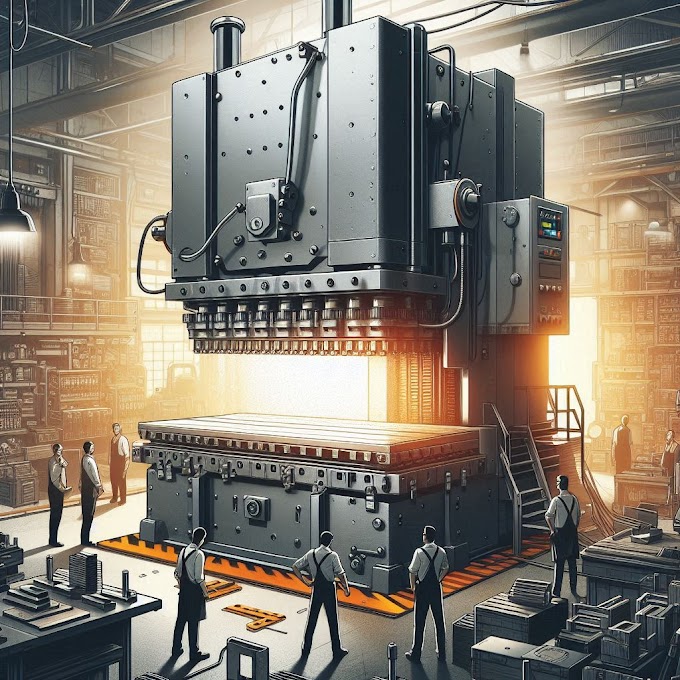
The essential components of a power press machine work together to deliver precise and efficient metal forming operations. The machine features a rigid frame that supports all major parts, along with a ram or slide that moves vertically to apply the pressing force. A robust bed holds the die assembly, while bolster plates provide stability during operations. The clutch and brake system controls engagement and stopping accuracy, ensuring safe motion. Power is transmitted through the flywheel, crankshaft, and connecting rods, which convert rotational motion into linear force. Modern presses also include control panels, lubrication units, and safety guards to enhance productivity and operator protection.
Working principle of Power press machine
The working principle of a power press machines is based on converting rotational motion into a powerful linear force to shape metal. When the motor drives the flywheel, energy is stored and then transmitted through the clutch and crankshaft mechanism, which converts the flywheel’s rotation into the up-and-down movement of the ram or slide. A die set—consisting of a punch and die—is mounted between the ram and bed, and as the ram moves downward, it applies controlled force to cut, bend, or form the sheet metal according to the die’s design. After the operation, the brake system ensures precise stopping, and the ram returns to its upper position for the next cycle. This continuous, synchronized motion enables the power press to deliver fast, repetitive, and highly accurate metalworking operations.
How is Power press machine manufactured?
A power press machine is manufactured through a carefully controlled process that ensures strength, precision, and long-term performance. The production begins with design engineering, followed by fabrication of the frame using high-grade steel plates that are cut, welded, and stress-relieved for rigidity. Key mechanical parts like the crankshaft, flywheel, ram, and connecting rods are precision-machined using CNC tools to achieve accurate tolerances. After machining, these components are heat-treated to improve durability. The machine then moves to the assembly stage, where hydraulic, mechanical, pneumatic, and electrical systems are integrated, including the clutch, brake, motor, and control panel. Once assembled, each unit undergoes alignment checks, load tests, and safety inspections to ensure reliable pressing performance before final painting and dispatch.
What is Power press machine used for?
A power press machine is used for a wide range of metalworking operations that require high force and precision. It is commonly employed for cutting, punching, bending, shearing, forming, stamping, and drawing sheet metal into specific shapes and components. Industries such as automotive, electrical, appliance manufacturing, hardware production, and fabrication workshops rely on power presses to produce parts like brackets, washers, panels, enclosures, and structural components in large volumes. Power press machine suppliers ability to deliver consistent, repeatable results makes the power press an essential machine for mass production and precision metal shaping.
Factors to consider while choosing Power press machine manufacturer
When choosing a power press machine manufacturer, it is important to evaluate several key factors to ensure reliability, performance, and long-term value. Start by checking the manufacturer’s experience, technical expertise, and industry reputation, as these directly influence product quality. Assess the build strength of the machine, the quality of components such as the clutch, brake, flywheel, and control system, and whether the manufacturer follows strict quality and testing standards. Look for customization options, availability of different tonnage models, and advanced safety features. Equally important are after-sales support, spare parts availability, service response time, and transparent warranty terms. Considering these aspects helps you select a trusted manufacturer that can deliver durable, efficient, and application-ready power press machines.



0 Comments